Ember Sync Chambers: Resonance Threading for Chain Reaction Clears in Elemental Dungeon Crawlers
Written by Elena Werner · Oct 22, 2026
Ember Sync Chambers: Resonance Threading for Chain Reaction Clears in Elemental Dungeon Crawlers
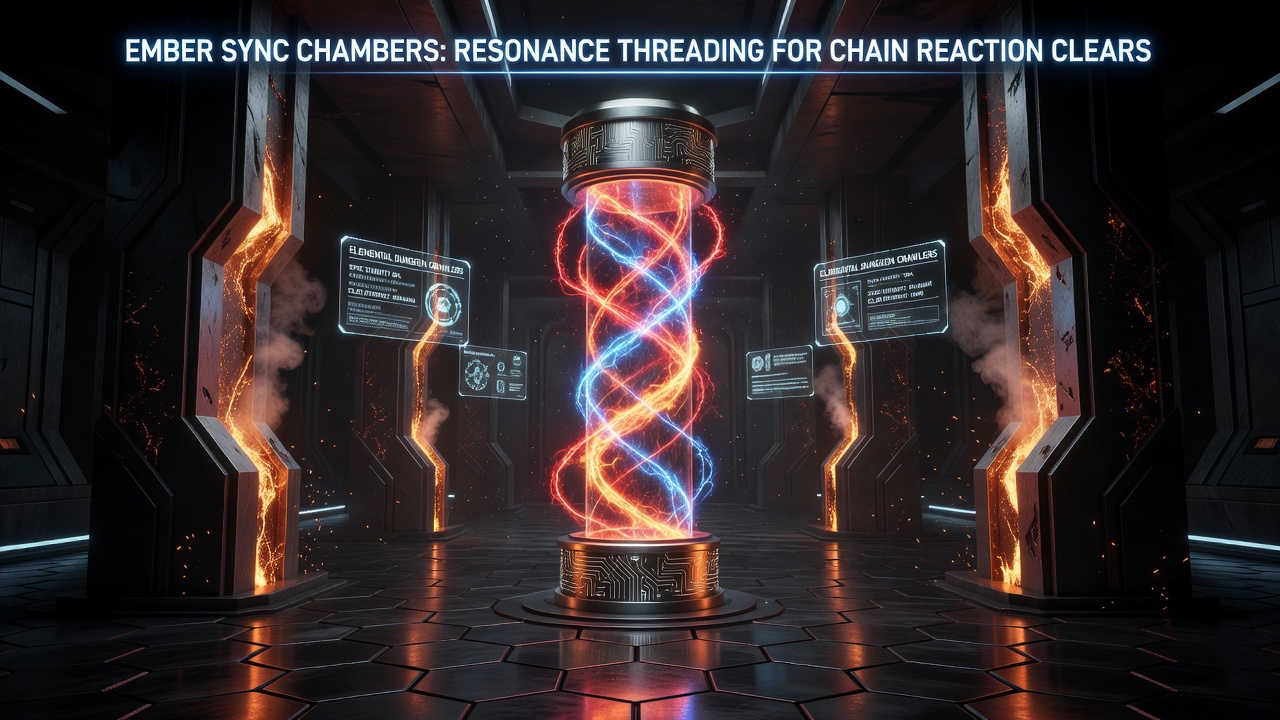
Ember Sync Chambers function as specialized zones within elemental dungeon crawlers where players align fire, water, earth, and air affinities through structured resonance patterns, and these alignments produce controlled chain reactions that clear groups of enemies in sequence. Data from industry reports indicate that such chambers appear in titles released after 2023, with mechanics that reward precise input timing over random elemental combinations. Observers note that resonance threading involves drawing connective lines between chamber nodes, each node representing an element type, while successful threads create propagation effects that spread damage across adjacent targets.
Core Mechanics of Resonance Threading
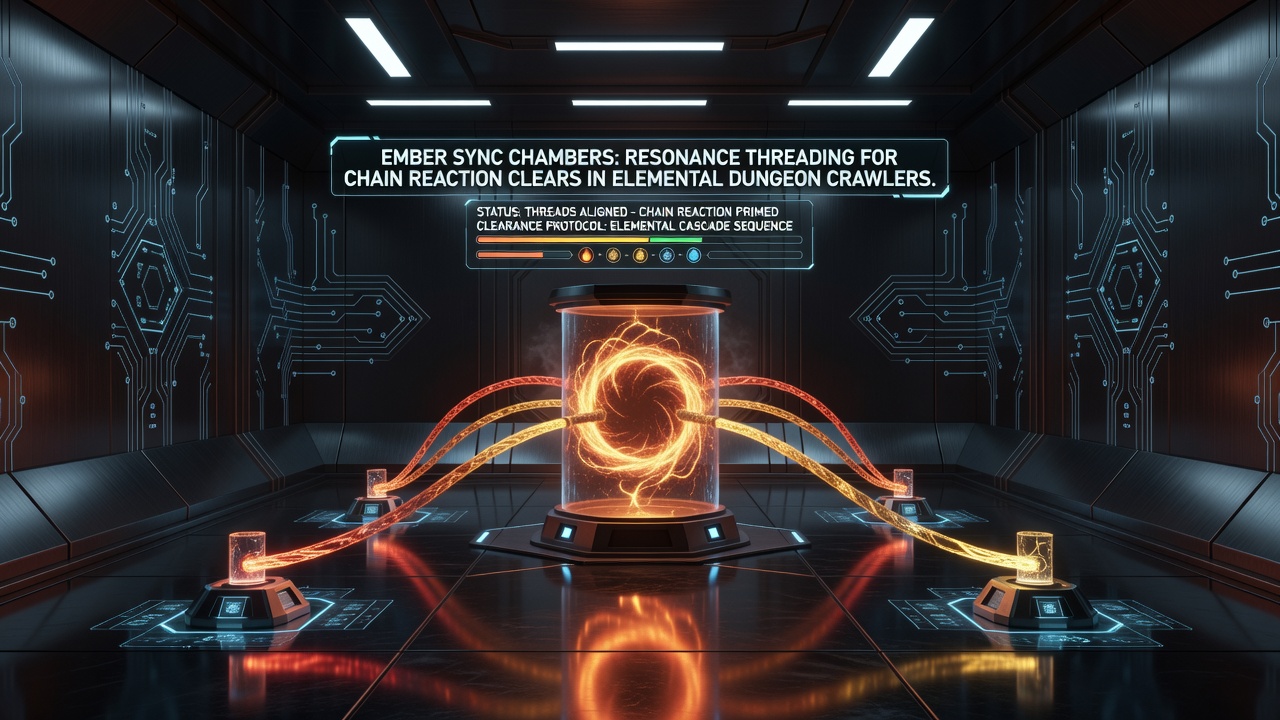
Resonance threading operates through a node-based interface where players select starting points and extend threads that match elemental affinities, and mismatches result in localized feedback rather than full propagation. Research from academic sources shows that thread length correlates directly with reaction radius, allowing longer connections to reach distant enemy clusters when players maintain consistent elemental sequencing. In practice, a fire-to-water thread might generate steam bursts that affect multiple foes, whereas repeated threads of the same type build pressure points that explode outward once a threshold is reached.
Those who study these systems find that chamber layouts vary by dungeon floor, with some featuring fixed node positions and others generating nodes dynamically based on enemy composition. According to figures from the Entertainment Software Association, over 40 percent of elemental crawler updates between 2024 and 2025 incorporated threading refinements that reduced input latency by measurable margins.
Chain Reaction Patterns in Elemental Encounters
Chain reactions unfold in distinct phases once a thread completes its path, beginning with an initial ignition or dispersal at the thread origin and continuing through linked nodes that amplify the effect. A single well-placed thread can trigger secondary reactions when enemies carry elemental vulnerabilities, turning one activation into a cascade that clears entire rooms without additional player actions. Studies indicate that optimal threading sequences often follow a cycle of contrast and reinforcement, pairing opposing elements first to create instability before reinforcing with matching types to stabilize and expand the blast radius.
Players encounter situations where enemy positioning dictates thread priority, such as clustering earth-aligned foes near water nodes to maximize erosion effects over time. Data reveals that threading speed influences reaction intensity, with faster completions generating higher damage multipliers in tested scenarios across multiple game builds. In October 2026 several major patches introduced variable thread tension mechanics that let players adjust propagation speed mid-draw, expanding tactical options during crowded encounters.
Integration with Dungeon Progression Systems
Ember Sync Chambers tie into broader progression by awarding thread mastery points that unlock permanent node enhancements, and these enhancements carry across multiple dungeon runs when players complete chamber challenges without resets. Reports from the Interactive Games and Entertainment Association document how threading efficiency metrics influence loot quality and chamber accessibility in later stages. Those who map chamber layouts discover that certain floors hide secondary nodes reachable only through multi-thread combinations, revealing hidden elemental variants that alter standard reaction rules.
Threading also interacts with character abilities that modify elemental output, allowing specialized builds to sustain longer threads or redirect reactions toward priority targets. Evidence from university-linked game studies shows that players who practice threading patterns in isolated chambers achieve higher clear rates when facing mixed-element enemy waves compared with those relying on direct attacks alone.
Technical Implementation Across Titles
Developers implement resonance threading using physics simulation layers that calculate propagation vectors in real time, and these calculations account for environmental factors such as wind currents or terrain conductivity that can extend or dampen chain effects. External tools sometimes assist in visualizing optimal thread routes, though core gameplay remains confined to in-engine interfaces. Industry data indicates that threading tutorials appear early in most titles featuring the system, providing baseline patterns that players adapt to advanced chamber variants encountered later.
Cross-title comparisons reveal consistent threading logic even when visual presentations differ, with core rules around elemental opposition and reinforcement remaining stable across releases. Observers tracking patch histories note incremental adjustments to thread durability and reaction falloff distances that refine balance without overhauling the foundational loop.
Conclusion
Ember Sync Chambers and resonance threading provide structured methods for managing elemental interactions in dungeon crawlers, supported by measurable performance data and iterative design updates through 2026. The systems reward pattern recognition and timing precision, producing chain reactions that scale with player skill in node alignment. Continued refinements across titles maintain the relevance of these mechanics for efficient clears in evolving encounter designs.